Websites for restaurants & hospitality
A warm welcome starts online.
Bring the atmosphere, menu information, hours, and ways to plan a visit together. DashTrack's hospitality roots inform websites that feel considered before a guest arrives.
The visit starts with the website
Set the scene. Make the details clear.
A restaurant website needs to feel like the place, while making practical information easy to find. Balance photography and identity with readable content, clear hours, and the information someone needs to plan a visit.
- Bring supplied menu information and venue details into a clear structure.
- Keep hours, location, and contact information easy to find on a phone.
- Use real imagery that reflects the atmosphere rather than generic decoration.
Give each kind of visit a place
From a first look to a plan.
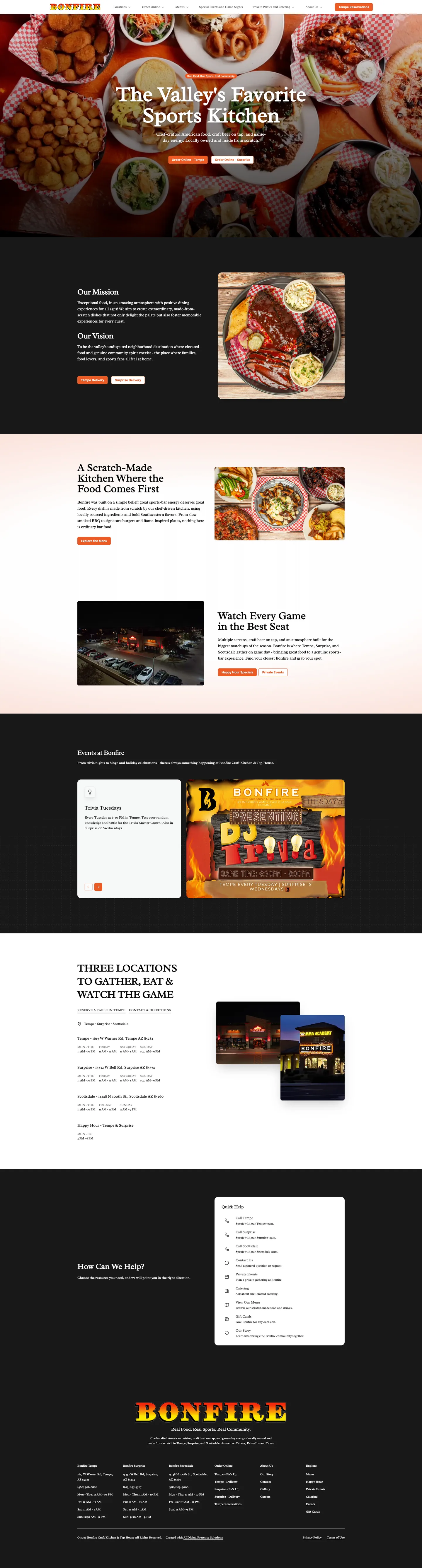
A visitor exploring dinner, a gathering, or a private event may need different information. Dedicated pages can make that path clearer, with useful links and an inquiry route that fits the business.
- Give private events or other real offerings room to explain themselves.
- Connect visitors to the reservation or ordering destinations the business uses.
- Keep the website's own story distinct from third-party platforms.
A useful path, not a complicated one
From a sense of the place to a visit.
A considered experience connects the atmosphere to the details. The guest should not have to choose between an attractive page and a useful one.
- 01
The welcome
What does the place feel like?
Introduce the atmosphere with a clear identity and thoughtful photography.
- 02
The details
What should a guest know?
Keep the menu information, hours, location, and event details easy to explore.
- 03
The plan
How does the visit begin?
Offer the right reservation link or inquiry route for the guest's next step.
Design, hosting, security, search and AI foundations, and website support stay together in the plan.
Questions & answers
Useful answers for restaurants & hospitality.
The website should fit the way the business works. Start with the details that matter before agreeing on the build.
Can menu information and private events have dedicated pages?
Yes. The sitemap can give supplied menu information, private events, and other actual experiences a clear place on the website.
The page structure and content are agreed during scoping. The current offer is a website service, not an assumed restaurant-operations or point-of-sale platform.
What if the venue already uses a reservation or ordering service?
A website can point guests to an existing third-party destination. Discuss the current setup during onboarding so the right route can be planned.
An embed or deeper software connection depends on feasibility and scope. Online stores, carts, and checkout are outside what DashTrack builds.
How can more than one venue be explained clearly?
The sitemap can distinguish venues with accurate names, locations, hours, and the right visit-planning information for each. The structure should make it obvious which venue a guest is exploring.
Page count and build scope are agreed together. The website plan does not imply a multi-location operations system.
How are changing hours, menus, and venue details handled?
Website support can be used to request changes to existing pages, using information and assets supplied by the business.
New event sections, a wider redesign, or additional software connections are discussed and scoped before proceeding.